
HDPE vs LDPE Garbage Bags: Which Material Fits Your Waste
HDPE garbage bags and LDPE garbage bags can look alike on a pallet, but the two kinds of polyethylene behave very differently once a bag is full of waste.
This guide compares the materials using published reference data, explains which waste suits each one, and shows how the choice changes the thickness and weight of the bag you order. It is written for importers, distributors and private label buyers who need to specify bags, not just buy them. For thickness units and conversions, see our trash bag thickness guide; for the bag types themselves, see all trash bag types.
1- What separates HDPE from LDPE
Both are polyethylene, made by polymerising ethylene. The difference lies in the shape of the molecules. HDPE — high-density polyethylene — has little branching, so its chains pack tightly. LDPE — low-density polyethylene — has a high degree of short- and long-chain branching, so its chains pack loosely. Density is how the industry captures that difference.
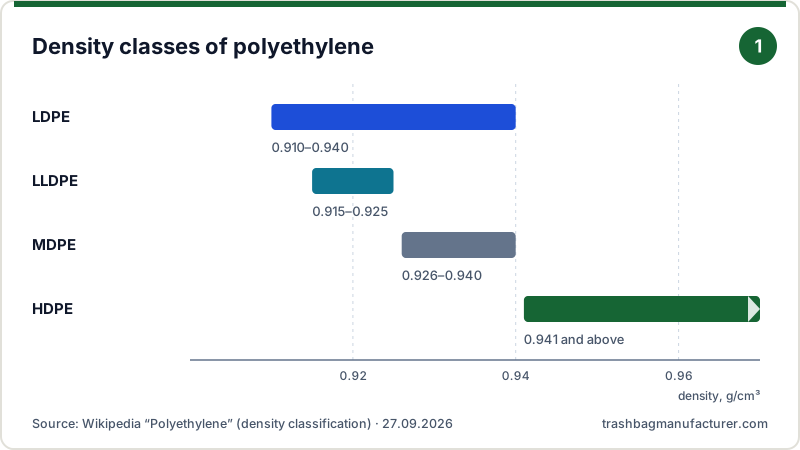
| Material | Density |
|---|---|
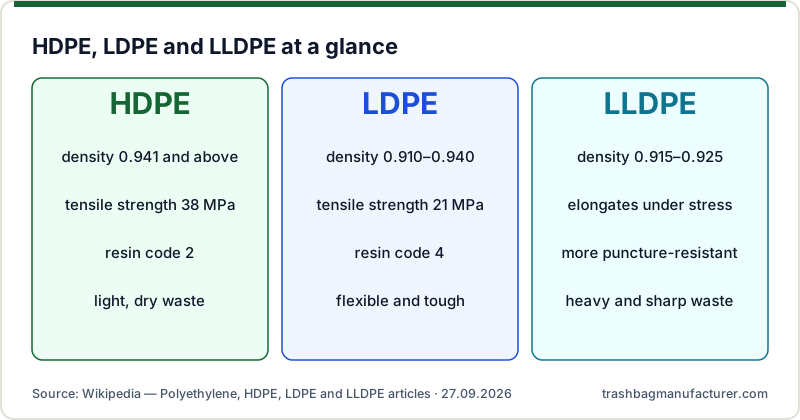
| LDPE | 0.910–0.940 g/cm³ |
| LLDPE | 0.915–0.925 g/cm³ |
| MDPE | 0.926–0.940 g/cm³ |
| HDPE | 0.941 and above g/cm³ |
The classification in the polyethylene reference defines HDPE as 0.941 g/cm³ and above, LDPE as 0.910–0.940 g/cm³ and linear low-density polyethylene (LLDPE) as 0.915–0.925 g/cm³. Medium-density polyethylene (MDPE) sits between them at 0.926–0.940 g/cm³. The numbers look close, but the structural difference behind them is large.
LLDPE deserves its own mention. It is made differently — by copolymerising ethylene with short-chain alpha-olefins — and the bin bag reference lists it, alongside HDPE, as the material used when extra strength is needed, while soft and flexible LDPE remains the most common bag film.
2- How the two films behave in a bag
Tighter packing makes HDPE stronger and harder. Reference data on high-density polyethylene give a tensile strength of about 38 MPa for HDPE against 21 MPa for LDPE — a far larger gap than the small difference in density suggests.
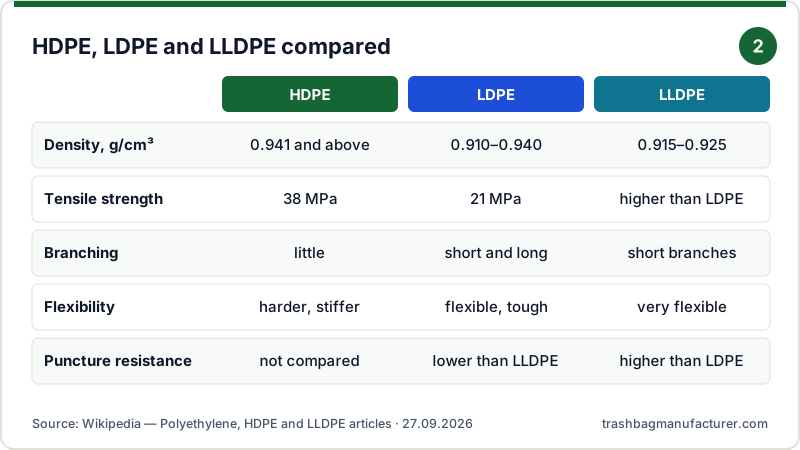
LDPE trades strength for flexibility: lower tensile strength, but higher ductility and resilience, so the film gives under load instead of splitting. LLDPE sits in between in a useful way. According to the LLDPE reference, it has higher tensile strength and higher impact and puncture resistance than LDPE, is very flexible, elongates under stress and can be made into thinner films.
In practice this gives three recognisable kinds of bag:
- HDPE bags — thin, stiff and strong for their weight; best when the load is light to moderate and free of sharp edges.
- LDPE bags — soft and flexible; forgiving with irregular shapes, and usually specified thicker for the same job.
- LLDPE bags — flexible and puncture-resistant; suited to heavy duty and industrial use.
3- When HDPE garbage bags are the better choice
HDPE's high strength-to-density ratio is its main advantage: the same job can often be done with less film. That makes HDPE garbage bags a good fit where waste is light, dry and free of sharp objects, and where bags are changed often.
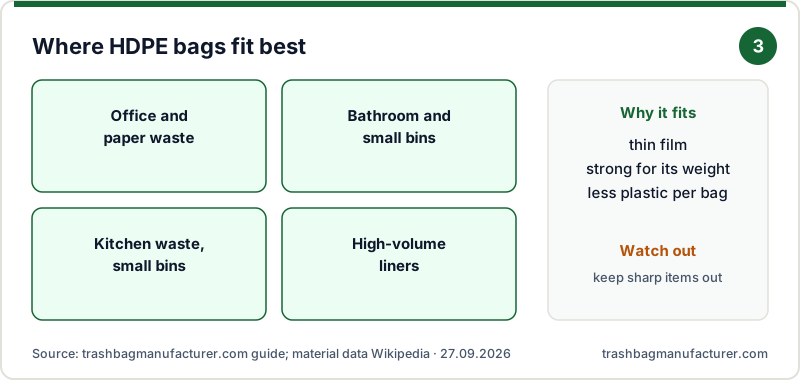
- Office, paper and light packaging waste in desk and office bins.
- Bathroom bins and other small household bins.
- Kitchen waste in small bins that are emptied every day.
- Liners used in high volumes, where a thinner film reduces the plastic bought per bag.
The limitation is puncture. A stiff film concentrates stress around a sharp point, so keep broken glass, metal offcuts and branches out of thin HDPE bags, or move to a thicker and more flexible film. Our household garbage bags and drawstring trash bags are produced in any size, thickness and colour; tell us the material you prefer and we confirm it in the quote.
4- When LDPE or LLDPE bags are the better choice
Choose LDPE or LLDPE when the waste is heavy, bulky, sharp or irregular, or when the bag will be dragged, compacted or thrown into a container. The film's ability to stretch absorbs energy that would split a stiffer bag.
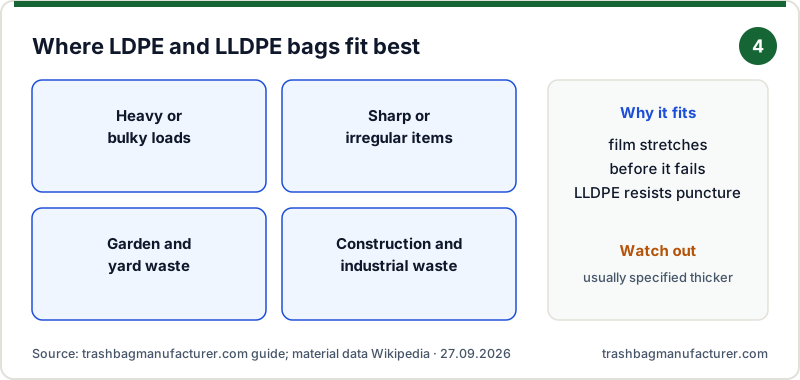
- Construction and renovation debris.
- Garden and yard waste that includes branches.
- Industrial and warehouse waste, including packaging with hard corners.
- Large bins that are filled high and lifted by hand.
For these uses the bin bag reference notes that thicker bags are used for heavy-duty applications such as construction waste. Our heavy duty and industrial garbage bags are made to the thickness and size you specify.
5- How the material changes thickness and bag weight
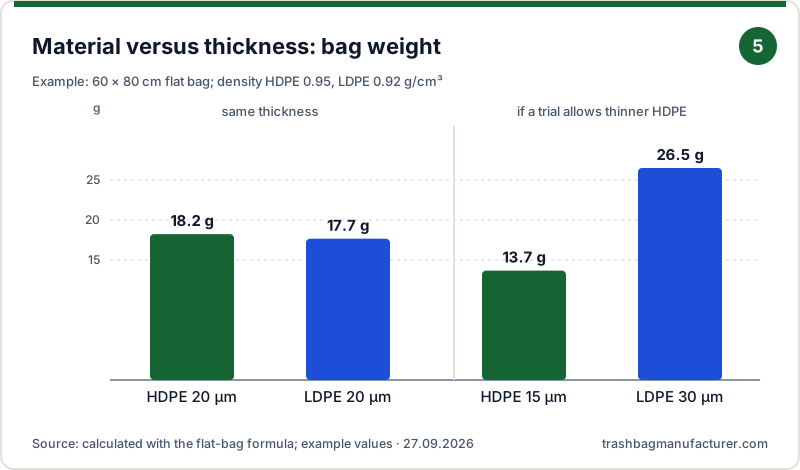
Because HDPE is stronger for its weight, an HDPE bag can often be specified thinner than an LDPE bag for the same job. Density, on the other hand, changes bag weight only slightly. The weight of a flat bag follows from its size, thickness and density: weight (g) = 2 × width (m) × length (m) × thickness (µm) × density (g/cm³). The example uses a 60 × 80 cm flat bag, with example densities of 0.95 g/cm³ for HDPE and 0.92 g/cm³ for LDPE, both inside their classes.
| Bag | Density | Bag weight |
|---|---|---|
| HDPE 20 µm | 0.95 g/cm³ | 18.2 g |
| LDPE 20 µm | 0.92 g/cm³ | 17.7 g |
| HDPE 15 µm | 0.95 g/cm³ | 13.7 g |
| LDPE 30 µm | 0.92 g/cm³ | 26.5 g |
The example shows both effects. At the same 20 µm thickness, the HDPE bag (18.2 g) is only slightly heavier than the LDPE bag (17.7 g), because the densities are close. But if a trial shows that a 15 µm HDPE bag does the job of a 30 µm LDPE bag, the HDPE bag uses about half the film by weight — 13.7 g against 26.5 g. Whether that trade works depends on your waste, which is why we recommend testing both before you order a full container.
For unit conversions and how to write thickness correctly, see specifying thickness in our thickness guide.
6- How to specify the material in a quote request
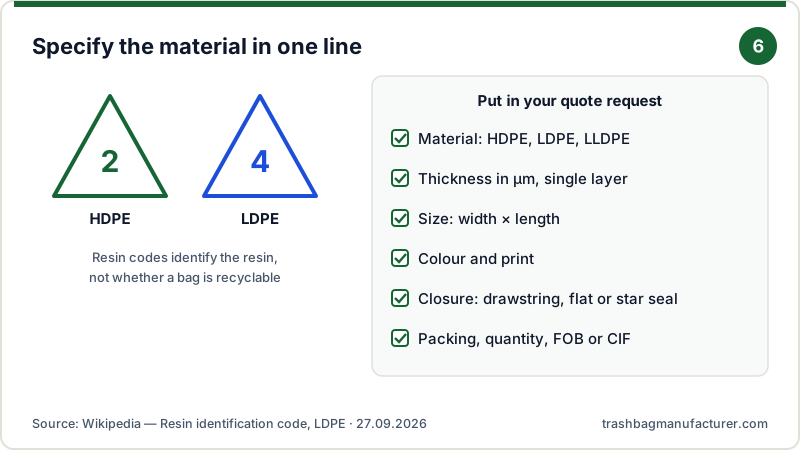
A clear material line saves a round of emails. Name the resin, and if you accept a blend, say so. Resin identification codes help with labelling: HDPE carries code 2 and LDPE code 4. As the resin identification code reference points out, the code identifies the resin; it does not by itself mean that the bag is recyclable where it is sold.
Include the following in your request:
- Material: HDPE, LDPE, LLDPE or a blend, and any recycled-content requirement in your market.
- Thickness in microns or mil, per single layer, with a tolerance.
- Size: flat width × length, and any gusset.
- Colour and print, including private label artwork — see our private label page.
- Closure: drawstring, flat seal or star seal.
- Packing, quantity and delivery term — FOB or CIF, explained on our export page.
You can enter all of this in our quote request form. The factory prices every specification individually and confirms materials in writing; no price list is published online.
Frequently asked questions
Quick answers on HDPE and LDPE for buyers comparing garbage bag specifications.
Are HDPE garbage bags stronger than LDPE garbage bags?
In tensile strength, yes: about 38 MPa for HDPE against 21 MPa for LDPE as bulk materials. In a bin, strength also depends on how the film copes with sharp or bulky waste, where flexible LDPE and puncture-resistant LLDPE are often the better choice.
Which is cheaper, HDPE or LDPE bags?
It depends on resin prices at the time of production and on how much film each bag needs. Compare quotes per bag, at the thickness each material needs for your waste, rather than only the price per kilogram.
What do the resin codes 2 and 4 mean on a bag?
They identify the resin: 2 for HDPE and 4 for LDPE. They are not a recyclability label; local collection rules decide whether a bag is recycled.
Can you produce the material I specify?
Tell us the material and the performance you need in your quote request. The factory confirms the resin, thickness and construction in writing before production, so you know exactly what you are ordering.
Next: read the thickness guide, browse all buying guides, go back to the home page, or contact us with your questions.